The Future of Work: Leveraging Generative AI for Competitive Advantage
What is Generative AI (GenAI)?
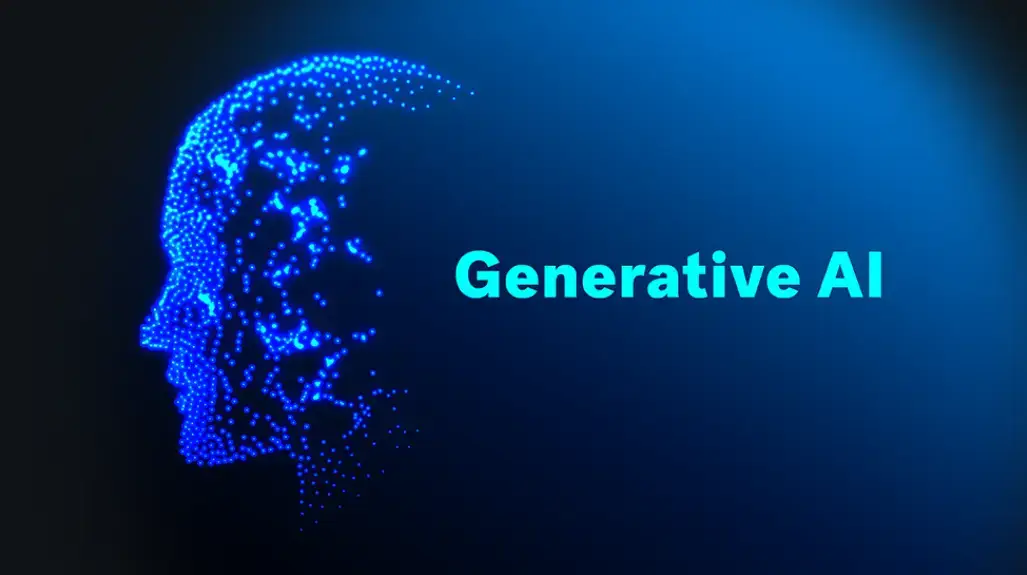
Generative Artificial Intelligence (GenAI) refers to a class of AI systems that can create new content — such as text, images, music, code, or even videos — that resembles human-generated output. Unlike traditional AI models that classify or predict based on existing data, GenAI learns patterns, structures, and relationships within data to produce original outputs that are coherent and contextually relevant.
How Generative AI Works
1. Training Data GenAI models are trained on massive datasets that include diverse forms of human-created content. The goal is to learn underlying structures, such as language grammar, artistic styles, or musical rhythms, depending on the domain.
2. Model Architecture: Generative AI often uses advanced neural network architectures, such as:
Transformer Models: The foundation for systems like GPT (Generative Pretrained Transformer). They use attention mechanisms to understand relationships between words or tokens in context.
Diffusion Models: Used for image generation (e.g., DALL·E, Stable Diffusion). These models gradually convert random noise into detailed images.
GANs (Generative Adversarial Networks): Consist of two networks — a generator that creates data and a discriminator that evaluates it — competing to produce realistic outputs.
3. Latent Space Representation
During training, the model learns a latent space, which is a mathematical representation of learned features. When given a prompt or input, the model samples from this space to generate new data with similar characteristics.
Key Components
Prompt A prompt is the input or instruction given to a GenAI model. For example, “Write a poem about the ocean” or “Generate an image of a futuristic city.” The model interprets the prompt to produce an output that matches the intent. Fine-Tuning After pretraining on general data, GenAI models can be fine-tuned on domain-specific data (e.g., medical text, legal documents) to improve accuracy and relevance. Reinforcement Learning from Human Feedback (RLHF) This process helps align model outputs with human preferences. Humans rate model responses, and the system learns which outputs are most useful or appropriate.
Application of Generation AI
Text Generation: Chatbots, content creation, report summarization, and code completion. Image Generation: Artwork, design prototypes, photo enhancement, and digital avatars. Audio & Music: Voice synthesis, sound effects, and original music composion. Video Generation: Animation, simulation, and virtual environments. Data Augmentation: Creating synthetic data to train other machine learning models.
Advanced topics
A framework where two neural networks, a generator and a discriminator, are trained simultaneously. The generator tries to create data that looks real, while the discriminator tries to distinguish between real and fake data. When a model performs well on training data but poorly on unseen data. Techniques like regularization, dropout, and cross-validation are used to mitigate this. Neural networks have many hyperparameters, like the number of layers, the number of neurons in each layer, the learning rate, etc.
Multimodal Models Modern GenAI systems can process and generate multiple types of content — for example, combining text, image, and audio inputs. Models like GPT-4 and Gemini can understand complex cross-modal relationships.
Agents and Automation GenAI is evolving into intelligent AI agents capable of reasoning planning, and perfoming actions across digital tools autonomously. Responsible Ai Techniques such as model interpretability, bias mitigation, and ethical AI governance are essential to ensure GenAI systems are safe and trustworthy. Summary: Generative AI represents a major leap in artificial intelligence, enabling machines not just to analyze data but to create new ideas and content. By leveraging architectures like Transformers and GANs, GenAI can mimic creativity and language understanding at human-like levels. Its applications span industries — from art and entertainment to healthcare and business — while ongoing research continues to improve its reliability, fairness, and efficiency.
Responsibile AI Techniques such as model interpretability, bias mitigation, and ethical AI governance are essential to ensure GenAI systems are safe and trustworthy.
Summary: Generative AI represents a major leap in artificial intelligence, enabling machines not just to analyze data but to create new ideas and content. By leveraging architectures like Transformers and GANs, GenAI can mimic creativity and language understanding at human-like levels. Its applications span industries — from art and entertainment to healthcare and business — while ongoing research continues to improve its reliability, fairness, and efficiency.